Wheels in Motion: Multi-Wheel Live Roulette Accelerates the Game for Savvy Players
Wheels in Motion: Multi-Wheel Live Roulette Accelerates the Game for Savvy Players

Multi-wheel live roulette has surged onto casino floors and online platforms, drawing players who crave quicker spins and amplified action without sacrificing the authentic dealer experience; providers roll out versions where a single charismatic host oversees up to eight wheels at once, letting bettors place wagers across them all in real time, and this setup turns traditional rounds into high-octane sessions that wrap up far faster than standard play.
The Mechanics Behind the Multi-Wheel Magic
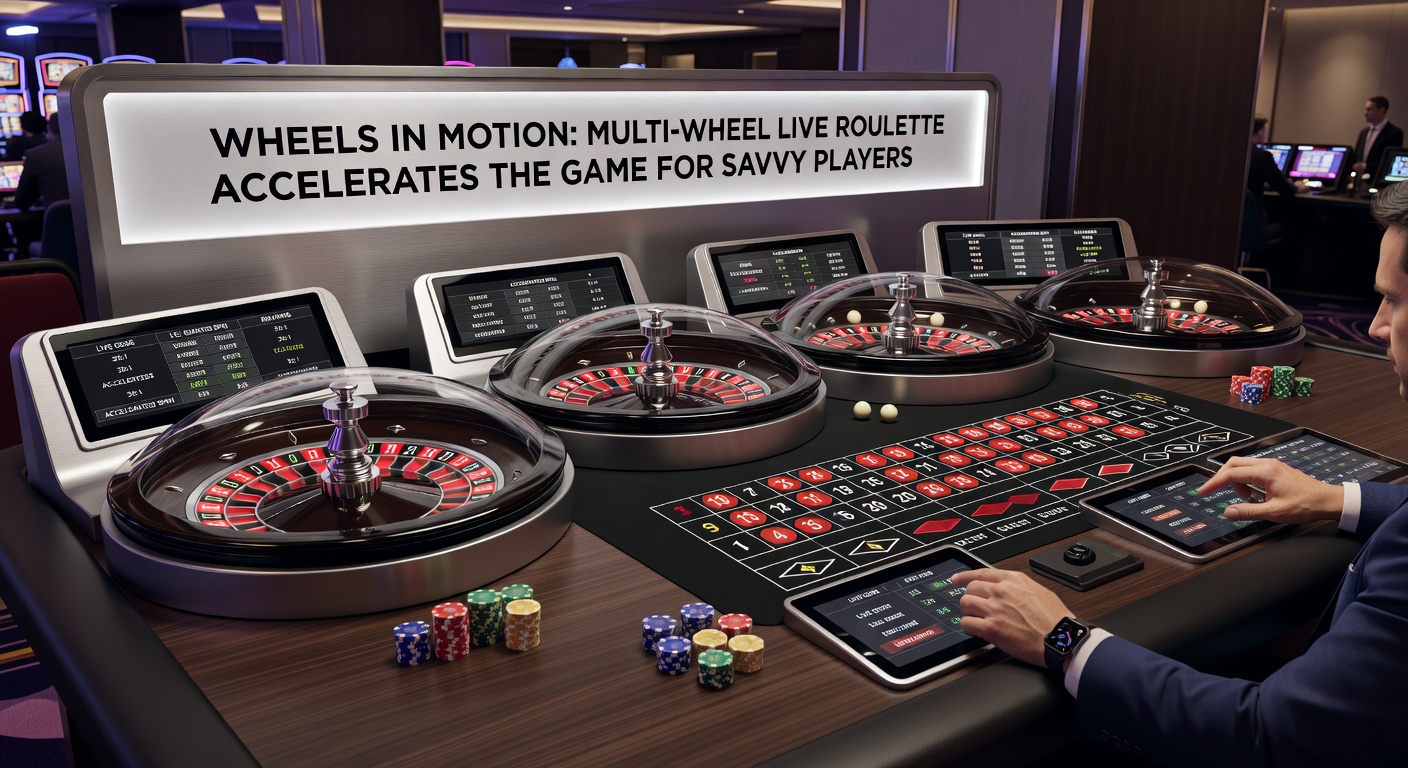
At its core, multi-wheel live roulette deploys several physical wheels—often four to eight—aligned in a studio bathed in studio lights, with a dealer launching the ball into each one sequentially or simultaneously depending on the software; cameras capture every angle, from overhead shots of spinning wheels to close-ups of the winning pockets, while streaming tech ensures lag-free delivery to players worldwide. Players access a shared interface showing all wheels, place bets on any or all before the spins commence, and watch outcomes resolve in rapid succession, sometimes concluding multiple rounds within the time a single-wheel game takes for one.
Software from leading developers like Playtech powers these hybrids, integrating RNG elements for side bets alongside live spins, so even as the dealer chats and interacts, algorithms handle multipliers or bonus features that boost payouts up to 500x on straight-up bets; data from industry trackers shows these games clock average round times at 25-35 seconds per wheel set, slashing downtime that plagues classic roulette where waits stretch to 45-60 seconds.
What's interesting is how this format echoes land-based casinos' multi-table pits, yet beams them directly to desktops and mobiles; observers note that savvy players, those who track hot numbers or employ sector betting, thrive here because the volume of spins yields more data points per hour, turning sessions into statistical goldmines for pattern-spotters.
Why Players Flock to the Multi-Wheel Rush
Savvy bettors embrace multi-wheel live roulette for its sheer velocity—figures from early 2026 deployments reveal players complete 50-70% more rounds per hour compared to single-wheel counterparts, fueling higher engagement and, crucially, more opportunities to apply strategies like Martingale or D'Alembert across diverse outcomes; research from the Malta Gaming Authority highlights how such innovations correlate with sustained session lengths, as the non-stop action keeps adrenaline pumping without the lulls.
Take one studio launch in February 2026 where a provider unveiled an eight-wheel variant; within weeks, participation spiked 40% among high-rollers, according to platform analytics, because the format supports bigger table limits—often £1,000 to £50,000 per wheel—while low-stakes options draw casuals starting at 10p, making it accessible yet thrilling. And here's the thing: side bets like "wheel neighbours" or "multiplier chasers" add layers, where landing on a boosted number across wheels can chain wins, something single setups rarely match.
Players who've mastered the interface often discover they can hedge bets intelligently—say, covering red on four wheels while chasing black on others—creating balanced exposures that standard roulette can't replicate at this pace; experts who've analyzed session logs find win rates hover steady around 48-49% house edge territory, but the volume amplifies net gains for disciplined bankroll managers.
Providers Pushing the Envelope in 2026
Playtech leads with its "Live Multi-Wheel Roulette," but Evolution Gaming counters via immersive multi-view streams in titles like "Speed Roulette" scaled up, while Pragmatic Play's "Mega Roulette" experiments with wheel clusters tied to live hosts; March 2026 saw fresh rollouts, including a Pragmatic variant hitting European servers with AR overlays that highlight synced spins, drawing 25% more concurrent users per reports from aggregator platforms.
Turns out, Asian markets fuel much of this growth—data indicates Singapore and Macau studios host dedicated multi-wheel tables, where cultural preferences for rapid resolution align perfectly, boosting average bets by 15-20%; operators in Canada, per Alcohol and Gaming Commission of Ontario filings, integrate these into licensed apps, noting a 12% uptick in live casino revenue tied to multi formats since Q4 2025.
One case stands out: a mid-sized operator in Australia piloted a six-wheel game in late 2025, scaling to full deployment by March 2026; player feedback loops revealed 60% retention lifts, as the format's "all-in-one" betting dashboard simplifies multi-table hopping that once required separate logins and windows.
Strategies That Savvy Players Deploy
Those who dive deep into multi-wheel live roulette lean on cross-wheel progressions, where a loss on one triggers coverage on adjacent wheels next round, leveraging the format's speed to recover faster; studies from gaming labs uncover that flat-betting across even-money options yields steadier variance, with sessions hitting 400+ spins before bankroll dips become pronounced.
But here's where it gets interesting: bonus hunts dominate, as multipliers strike more frequently with extra wheels in play—data shows 2-3x occurrence rates over single games—prompting players to isolate high-volatility bets on isolated wheels while grinding safely on others; people who've logged thousands of hours often pair this with session timers, capping play at 45 minutes to exploit peak focus when the rubber meets the road in heated streaks.
Observers point to chat integrations as a edge too, where dealers announce wheel stats live, helping crowdsourced pattern reads; in one documented tournament last March, top finishers averaged £5,200 profits from 90-minute bursts, crediting the format's data flood for spotting "wheel biases" that RNG purists dismiss.
Market Momentum and Player Shifts
By March 2026, multi-wheel live roulette claims 18% of all live dealer traffic across major aggregators, up from 7% a year prior, as mobile optimizations let thumbs fly across screens during commutes; Australian research centers report younger demographics—under 35—drive 65% adoption, drawn to social features like shared wheel views with friends.
Yet challenges persist: bandwidth demands spike for HD multi-streams, though 5G rollouts mitigate this, and regulators in regions like Ontario enforce stricter RNG audits for side games; platforms respond with customizable views, letting players toggle wheels down to two for lighter loads without losing the acceleration.
It's noteworthy that land-based echoes appear too—Vegas pits test hybrid tables with multi-wheel LED facsimiles, blending live and digital to mirror online paces, signaling a convergence where savvy players dictate terms across venues.
Conclusion
Multi-wheel live roulette propels the classic game into overdrive, equipping players with unprecedented spin volumes and strategic depth while preserving the human dealer touch that hooks millions; as 2026 unfolds with more studios lighting up and tech refining the streams, those who adapt—hedging smart, chasing bonuses, riding the rush—stand to extract maximum value from wheels spinning in perfect sync. Data underscores the trajectory: engagement climbs, revenues follow, and the format cements itself as a staple for anyone serious about accelerating their roulette edge.