RNG Certification Protocols for Digital Wheel Gaming Systems

Certification processes for random number generators in digital wheel gaming platforms follow structured evaluation methods that verify statistical randomness and operational integrity across multiple testing stages, and these procedures draw from established international frameworks to confirm that outcomes remain unpredictable while meeting regulatory requirements in various jurisdictions.
Core Components of RNG Evaluation
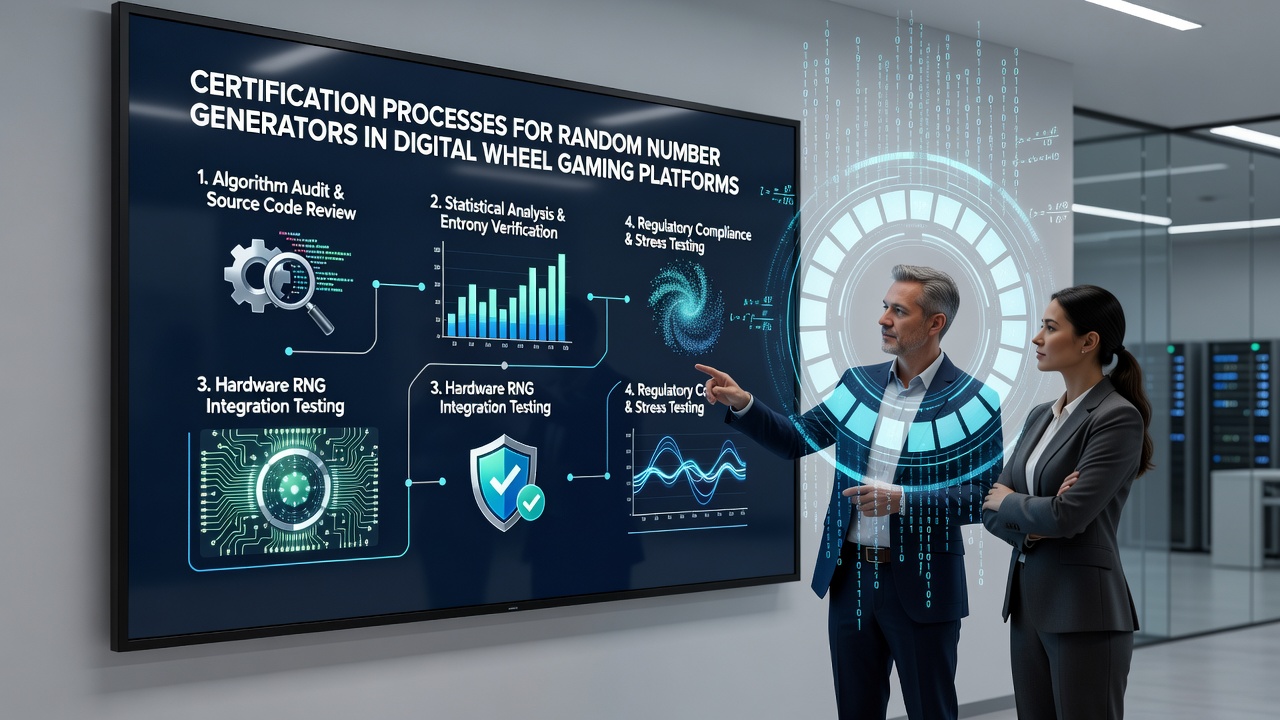
Random number generators serve as the foundation for digital wheel platforms by producing sequences that determine spin results, and certification begins with an assessment of the algorithm type whether it relies on cryptographic methods or hardware-based entropy sources while labs examine source code documentation and conduct statistical batteries such as the Diehard tests along with NIST's Statistical Test Suite to measure uniformity, independence and period length. Observers note that these initial reviews often extend over several weeks because evaluators simulate millions of outcomes to detect any deviations from expected probability distributions, and the process incorporates analysis of seed generation mechanisms that initialize each sequence to prevent patterns from emerging during extended operation periods.
Independent Laboratory Testing Procedures
Accredited testing facilities perform the bulk of certification work through a combination of theoretical reviews and empirical trials, and organizations like Gaming Laboratories International apply protocols that include source code audits followed by live environment simulations where RNG outputs undergo continuous monitoring for bias or predictability. Data from these evaluations gets compiled into detailed reports that highlight compliance with standards such as ISO/IEC 19790 for cryptographic modules, while additional checks verify that the generator maintains performance under varying system loads and after software updates occur. Researchers at institutions including those affiliated with the National Institute of Standards and Technology have contributed foundational guidelines that many labs reference during these assessments, and the resulting documentation provides operators with evidence that their systems align with required fairness benchmarks.
Regulatory Approval and Ongoing Monitoring
Once laboratory testing concludes successfully the certification moves into a regulatory phase where authorities review the findings before granting operational approval, and this step varies by region with bodies in North America and Europe applying distinct documentation requirements that often include re-testing after any significant code changes. Platforms must submit evidence of continuous monitoring systems that track RNG performance in real time, and figures reveal that many jurisdictions mandate annual or semi-annual renewals to account for evolving threat models and technological shifts. What's interesting is how these approvals integrate with broader platform audits that examine not only the generator itself but also the integration points where wheel animations and payout calculations connect to the underlying random sequences.
Recent Developments in Certification Standards
By June 2026 updates to certification frameworks have incorporated enhanced requirements for post-quantum cryptographic resilience in RNG implementations, and industry reports indicate that testing labs now evaluate resistance against emerging computational attacks while maintaining compatibility with existing hardware infrastructures. NIST publications on deterministic random bit generators provide reference points that several international testing bodies have adopted during their evaluation cycles, and similar guidance from Australian regulatory sources has influenced cross-border recognition agreements that streamline approvals for operators serving multiple markets. Those who've studied these trends observe that certification timelines have shortened slightly due to automated analysis tools, yet the depth of statistical scrutiny remains constant to preserve outcome integrity.
Integration Challenges and Verification Methods
Digital wheel platforms present unique certification considerations because the RNG must interface seamlessly with visual rendering engines and betting interfaces, and evaluators therefore test the full data pipeline to confirm that random values translate accurately into wheel positions without introducing rounding errors or display artifacts. Case studies from certification records show instances where minor discrepancies in floating-point calculations required algorithm adjustments before final approval was issued, while hardware RNG modules undergo separate environmental testing for temperature and electromagnetic interference effects. Experts have observed that successful certifications often involve iterative feedback loops between developers and labs, and this collaborative approach helps identify edge cases that might only surface after prolonged operational periods.
Conclusion
Certification processes for random number generators in digital wheel gaming platforms establish verifiable standards that support consistent performance across diverse operational environments, and the combination of laboratory analysis, regulatory oversight and periodic re-evaluation creates a structured pathway that addresses both current technical requirements and future advancements in computational security. Data indicates that adherence to these protocols continues to expand as more jurisdictions align their frameworks with international benchmarks, and the resulting documentation serves as a reference point for platform operators seeking to demonstrate system reliability through established testing methodologies.