Inside Specialized Laboratories: Roulette Software Fairness Testing Procedures

Specialized laboratories around the world examine roulette software to confirm that random number generators produce outcomes matching expected probabilities over extended sequences, and these facilities operate under strict protocols established by independent certification bodies. Researchers at such sites run millions of simulated spins while monitoring distribution patterns, and data from these tests must align with mathematical models for uniform randomness before any approval gets granted.
Core Testing Protocols in Modern Facilities
Engineers begin by isolating the RNG component from the full game interface, then subject it to batteries of statistical evaluations that include chi-square tests, runs tests, and serial correlation checks to detect any deviations from true randomness. Labs employ hardware-based entropy sources alongside software algorithms during verification, and June 2026 updates to testing suites have incorporated quantum random number generators from select providers to meet emerging standards in several jurisdictions.
Technicians also examine the integration layer that maps RNG values to wheel positions, ensuring no systematic bias appears in the final mapping logic, while automated scripts flag anomalies in real time and human analysts review flagged sequences for deeper inspection. Those who've studied these processes note that even minor coding changes require full retesting cycles that can span several weeks depending on game complexity.
Statistical Benchmarks and Compliance Frameworks
Facilities reference benchmarks from organizations such as the Nevada Gaming Control Board and the Australian Communications and Media Authority when establishing pass/fail criteria, and each roulette title must demonstrate that house edge calculations remain consistent across all bet types. Data from one recent multi-lab collaboration showed that approved RNG systems maintained outcome uniformity within 0.01 percent variance after 100 million trials, figures that regulators use to update their own guidelines periodically.
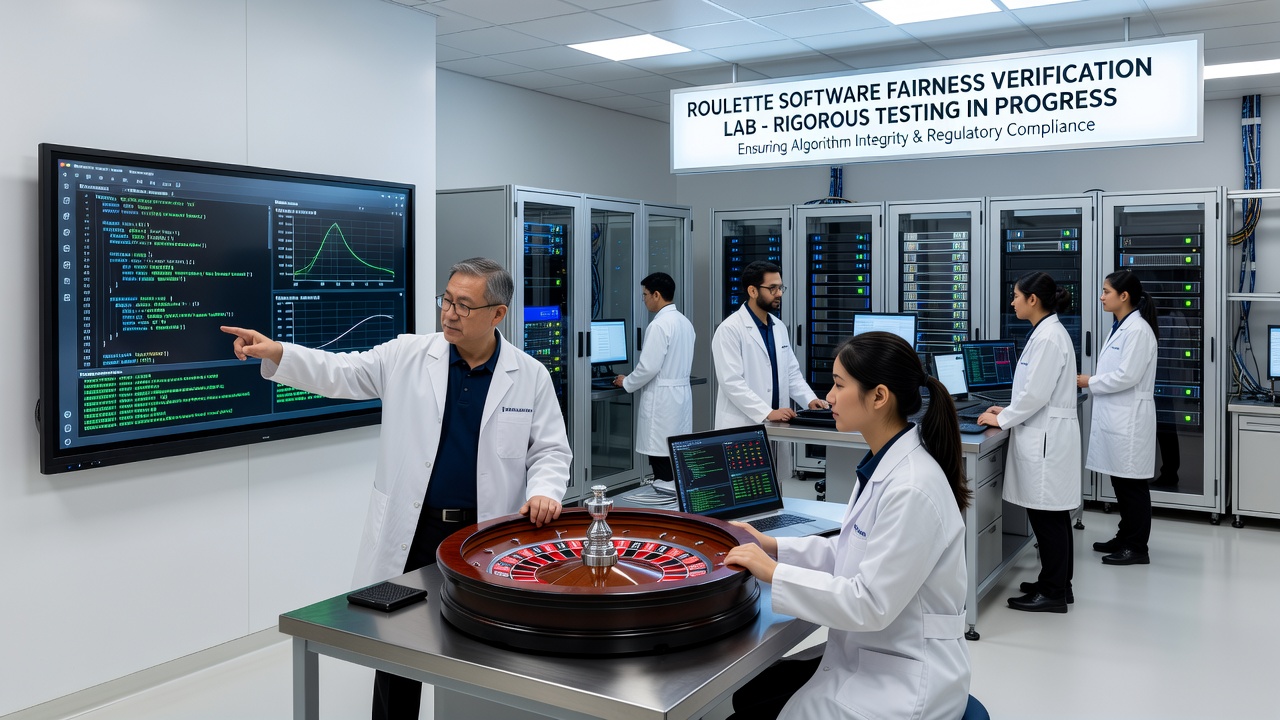
Certification reports typically include source code reviews, entropy quality assessments, and live environment stress tests, while external auditors cross-verify results before issuing final documentation. Observers note that labs now incorporate machine learning tools to accelerate pattern detection in large datasets, although final determinations still rest with certified statisticians who sign off on each submission.
Equipment Calibration and Environmental Controls
Hardware used in testing undergoes regular calibration against traceable standards maintained by national metrology institutes, and temperature, humidity, and electromagnetic interference levels stay tightly controlled to prevent external factors from influencing results. Staff members log every environmental parameter during test runs, creating audit trails that regulators can examine during compliance reviews scheduled throughout the year.
June 2026 saw several labs adopt enhanced shielding protocols following industry reports on potential interference vectors, and these measures have become standard in facilities handling high-volume certification work for European and North American markets. Teams rotate personnel across projects to maintain objectivity, and cross-training programs ensure multiple experts can replicate any portion of the verification workflow.
Case Examples from Recent Certification Cycles
One documented process involved a multi-wheel roulette variant that required separate RNG streams for each wheel, and analysts verified that cross-wheel correlations stayed below detectable thresholds after running synchronized test batches exceeding 50 million spins. Another submission featured an updated mobile client that pulled RNG data from remote servers, prompting labs to evaluate network latency effects on outcome delivery timing.
Take one researcher who examined legacy codebases during a 2026 audit cycle and discovered an outdated seeding mechanism that had passed earlier checks but failed newer entropy requirements, leading to a required code update before certification proceeded. These instances illustrate how testing evolves alongside software development practices.
Conclusion
Laboratories continue to refine their methodologies as roulette software incorporates new technologies such as blockchain-based result logging and adaptive difficulty features, and ongoing collaboration between certification bodies helps standardize approaches across regions. The verification ecosystem maintains its focus on empirical data collection and statistical validation to support consistent game operation wherever these titles appear.