Independent Verification Standards Protecting Fairness Across Britain's Mobile Spinning Applications
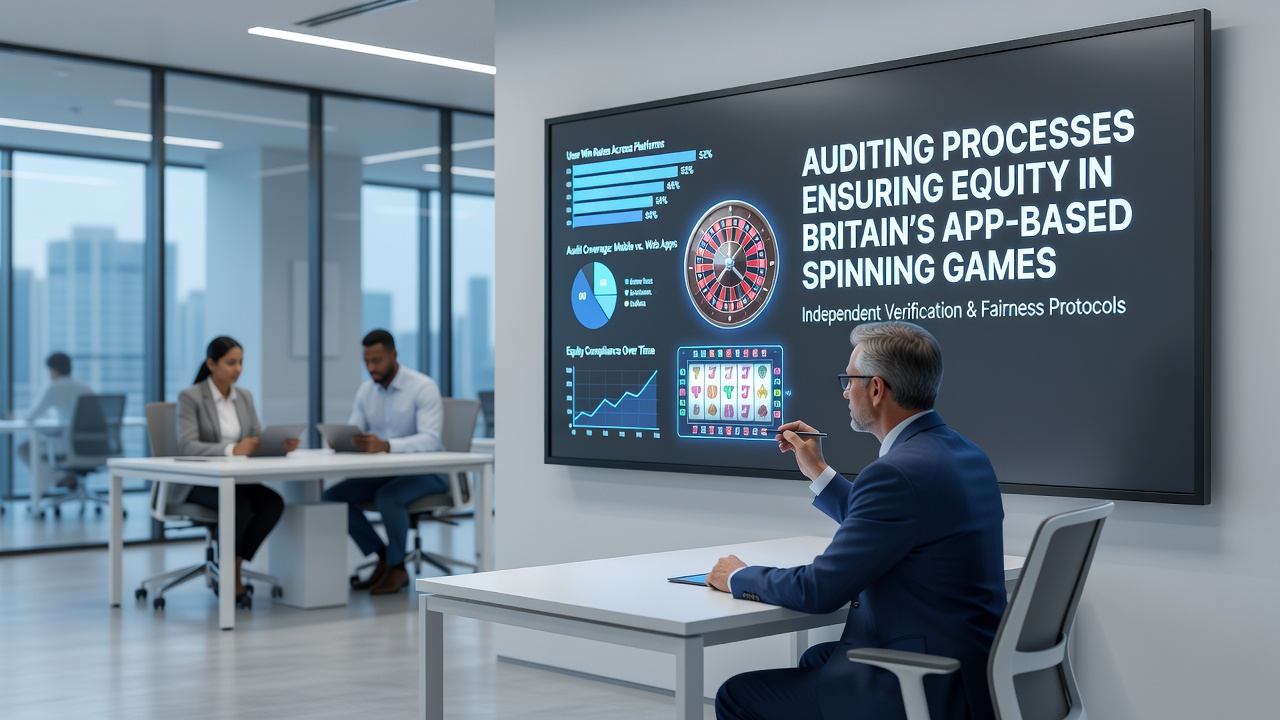
App-based spinning games have become a staple of digital entertainment in Britain, with millions accessing roulette, slots, and similar titles through smartphones and tablets each month; maintaining player equity in these environments requires rigorous, ongoing scrutiny that goes far beyond basic software checks. Independent testing laboratories examine random number generators, payout algorithms, and game mechanics to confirm that outcomes remain statistically consistent with advertised probabilities. These evaluations occur both before launch and at regular intervals throughout an application's operational life, creating a continuous feedback loop between developers, operators, and verification specialists.
Core Components of the Auditing Framework
Verification begins with source code analysis, where engineers dissect the underlying programming to ensure no hidden biases exist in the randomisation process; this step often involves statistical sampling across millions of simulated spins to detect deviations from expected distributions. Once initial certification clears, ongoing monitoring protocols activate, requiring operators to submit fresh data sets at predetermined intervals so laboratories can compare real-world performance against baseline models. Any anomalies trigger deeper investigations, including server log reviews and hardware integrity assessments.
Testing Methodologies Employed by Laboratories
Modern testing incorporates both theoretical modelling and practical simulation, allowing auditors to replicate millions of game cycles in compressed timeframes while cross-referencing results against mathematical expectations. Chi-square tests, serial correlation analysis, and diehard battery suites form part of the standard toolkit, each designed to expose patterns that might indicate manipulation or faulty implementation. When spinning games incorporate live dealer elements or hybrid mechanics, additional layers examine video stream integrity and result synchronisation to prevent discrepancies between displayed outcomes and recorded results.
One notable development in early 2026 saw several testing firms expand their mobile-specific protocols to address unique challenges posed by app updates and operating system changes; these enhanced procedures now include automated regression testing that flags any code modifications capable of altering game fairness. Observers note that such proactive measures have reduced the average time between discovery of potential issues and resolution, keeping player experiences stable across frequent software iterations.

Regulatory Alignment and International Benchmarks
While Britain maintains its own oversight structures, many operators voluntarily align their auditing practices with frameworks established by bodies such as the International Association of Gaming Regulators to facilitate cross-border compliance and demonstrate commitment to global standards. Data compiled by research institutions including the University of Nevada's gaming studies program indicates that jurisdictions adopting multi-layered verification see measurable reductions in dispute rates related to game outcomes. These findings, drawn from comparative analysis across several markets, highlight how transparent auditing processes contribute to sustained player confidence.
Documentation and Transparency Requirements
Operators must maintain detailed records of every audit cycle, including raw test data, laboratory reports, and corrective actions taken when needed; such documentation becomes available to relevant authorities upon request and often forms the basis for public-facing fairness certifications displayed within applications. Players who examine these seals can trace verification history back to specific testing dates and laboratories, providing an additional layer of reassurance without requiring technical expertise.
Case studies from 2025 and 2026 reveal instances where routine audits uncovered minor RNG drift caused by hardware aging, prompting timely equipment replacements before any measurable impact reached users. In another situation, a development team identified an edge-case scenario in a bonus feature after laboratory simulation flagged statistical clustering; the issue was resolved through code refinement and re-certified within weeks, illustrating how early detection protects both operators and participants.
Emerging Technologies and Future Directions
Blockchain-based logging systems have started appearing in select spinning applications, creating immutable records of game results that auditors can reference during verification without relying solely on operator-supplied data. This approach, piloted by several firms in spring 2026, allows independent parties to cross-check outcomes directly on distributed ledgers, reducing potential points of failure or dispute. Meanwhile, artificial intelligence tools assist laboratories in processing larger data volumes, spotting subtle anomalies that traditional statistical methods might overlook during initial passes.
June 2026 brought renewed focus on mobile network variability, with testing protocols expanding to account for latency effects on live spinning features; researchers at institutions across Europe and North America continue examining how connection stability influences perceived fairness, even when underlying RNG remains sound. Findings from these studies feed back into certification standards, ensuring verification keeps pace with technological evolution.
Conclusion
The combination of pre-launch certification, continuous monitoring, transparent documentation, and adoption of emerging verification tools creates a robust system that sustains equity in Britain's app-based spinning games; each element reinforces the others, forming a comprehensive safety net that evolves alongside the industry itself. As mobile platforms continue advancing, the auditing processes supporting them remain central to preserving trust between operators and players.