Independent Laboratory Approaches to RNG Certification for Mobile Roulette in Licensed UK Jurisdictions

Independent laboratories apply structured testing frameworks to confirm that random number generators powering mobile roulette variants deliver statistically unpredictable outcomes, and these processes operate under the oversight of licensing authorities in the United Kingdom. Testing begins with an evaluation of the underlying algorithm source code, where specialists examine the mathematical models that generate sequences for wheel positions and ball landings. Laboratories such as Gaming Laboratories International and iTech Labs perform this initial review before moving to empirical statistical analysis that runs millions of simulated spins across desktop and mobile environments.
Core Testing Methodologies Employed by Accredited Facilities
Statistical suites form the foundation of verification work, and these include the DIEHARD battery, the NIST Statistical Test Suite, and custom protocols tailored to gaming applications. Each suite applies multiple tests that measure uniformity, independence, and periodicity in the generated sequences, while mobile-specific checks account for differences in operating system random number sources and hardware acceleration features. Researchers collect data from actual device executions on iOS and Android platforms to capture any platform-induced deviations that simulator runs might overlook.
Seed generation receives particular attention because mobile devices often rely on hardware entropy sources such as accelerometer noise or thermal fluctuations, and laboratories verify that these seeds feed into cryptographically secure pseudorandom functions without introducing detectable patterns. When a mobile wheel variant uses a hybrid model that combines server-side and client-side generation, testers isolate each component and confirm that neither side can predict or influence the final result beyond its intended scope.
Mobile-Specific Challenges and Validation Steps
Network latency, memory management, and battery optimisation routines introduce variables that desktop systems rarely encounter, so laboratories replicate real-world conditions by running tests on devices with varying screen resolutions, processor architectures, and connection qualities. Observers note that one common procedure involves forcing the application into background states or triggering low-power modes to ensure the RNG state remains consistent and secure upon resumption. Data collected during these sessions feeds into comparative reports that document any measurable differences between mobile and non-mobile implementations of the same wheel variant.
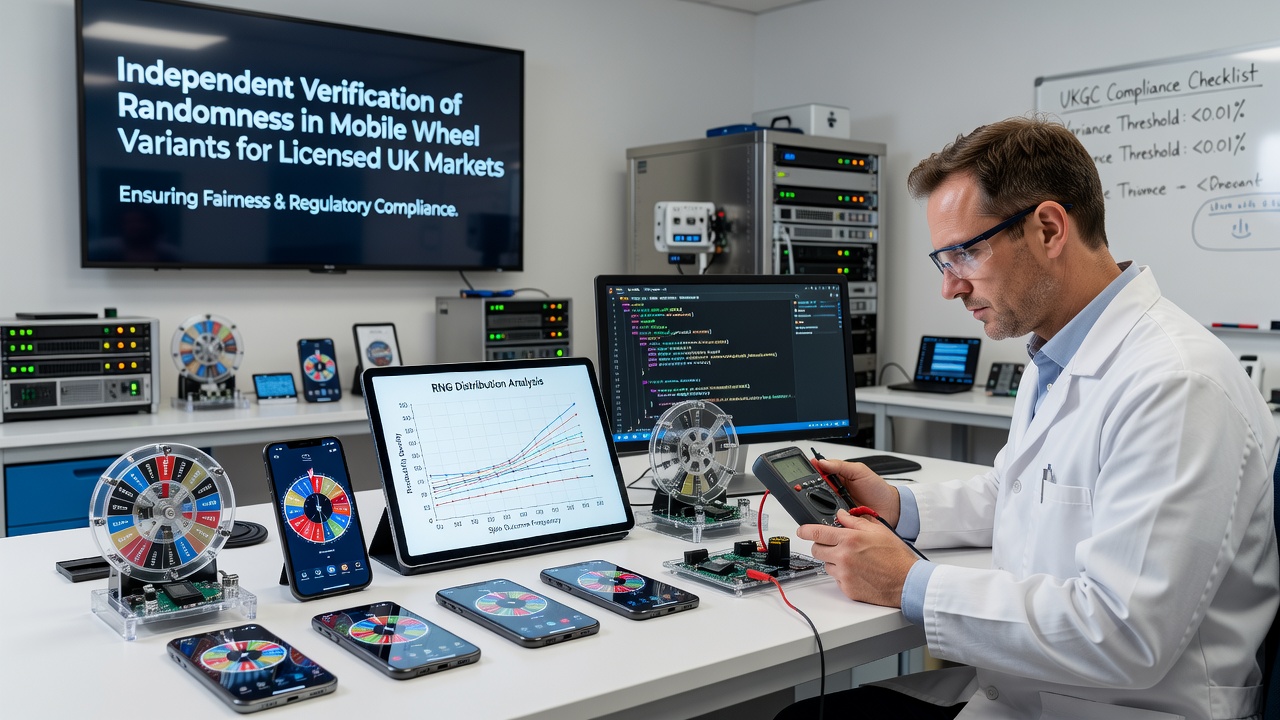
Certification cycles typically span several weeks, during which labs conduct both static code audits and dynamic runtime monitoring. A single mobile title may undergo thousands of automated spin cycles while engineers log every returned value against expected probability distributions. When anomalies appear, developers receive detailed remediation guidance before resubmission for retesting, and this iterative process continues until all statistical thresholds are met.
Integration with Broader Regulatory Frameworks
Licensing bodies outside the primary UK regulator draw on laboratory reports to confirm ongoing compliance, and similar approaches appear in jurisdictions such as the Malta Gaming Authority and the Alcohol and Gaming Commission of Ontario. Reports generated by independent labs serve as evidence during license renewals and during periodic audits that occur at intervals defined by each authority. Industry groups including the European Gaming and Betting Association publish aggregated findings that highlight trends in RNG performance across different device categories, and these summaries help operators benchmark their own implementations.
Academic research occasionally supplements commercial testing, with studies from institutions such as the University of Nevada, Reno examining long-term sequence behaviour in deployed systems. Findings from such work occasionally influence the design of new test batteries that laboratories adopt for future mobile wheel evaluations. As of June 2026, several providers have expanded their testing portfolios to include quantum-resistant algorithms in anticipation of evolving computational threats, although traditional statistical methods remain the primary verification standard.
Documentation and Ongoing Monitoring Requirements
Once certification is granted, laboratories issue detailed reports that operators must retain for regulatory inspection. These documents outline the exact test parameters, device models used, and statistical outcomes achieved. Continuous monitoring programs require operators to submit fresh data samples at regular intervals, and any significant code changes trigger mandatory re-evaluation. This lifecycle approach ensures that mobile wheel variants maintain certified randomness characteristics throughout their operational lifespan in licensed markets.
Conclusion
Independent laboratories maintain rigorous, multi-stage protocols that combine code review, statistical analysis, and platform-specific testing to verify randomness in mobile roulette variants offered within licensed UK markets. These procedures integrate with regulatory requirements from multiple jurisdictions and draw on both commercial and academic resources to stay current with technological developments. The resulting certifications provide documented assurance that game outcomes meet established statistical standards across the range of mobile devices in active use.