Delays Decoded: How Live Roulette Broadcasts Shape Bet Timing Across Screens
Delays Decoded: How Live Roulette Broadcasts Shape Bet Timing Across Screens
The Mechanics of Live Roulette Broadcasts
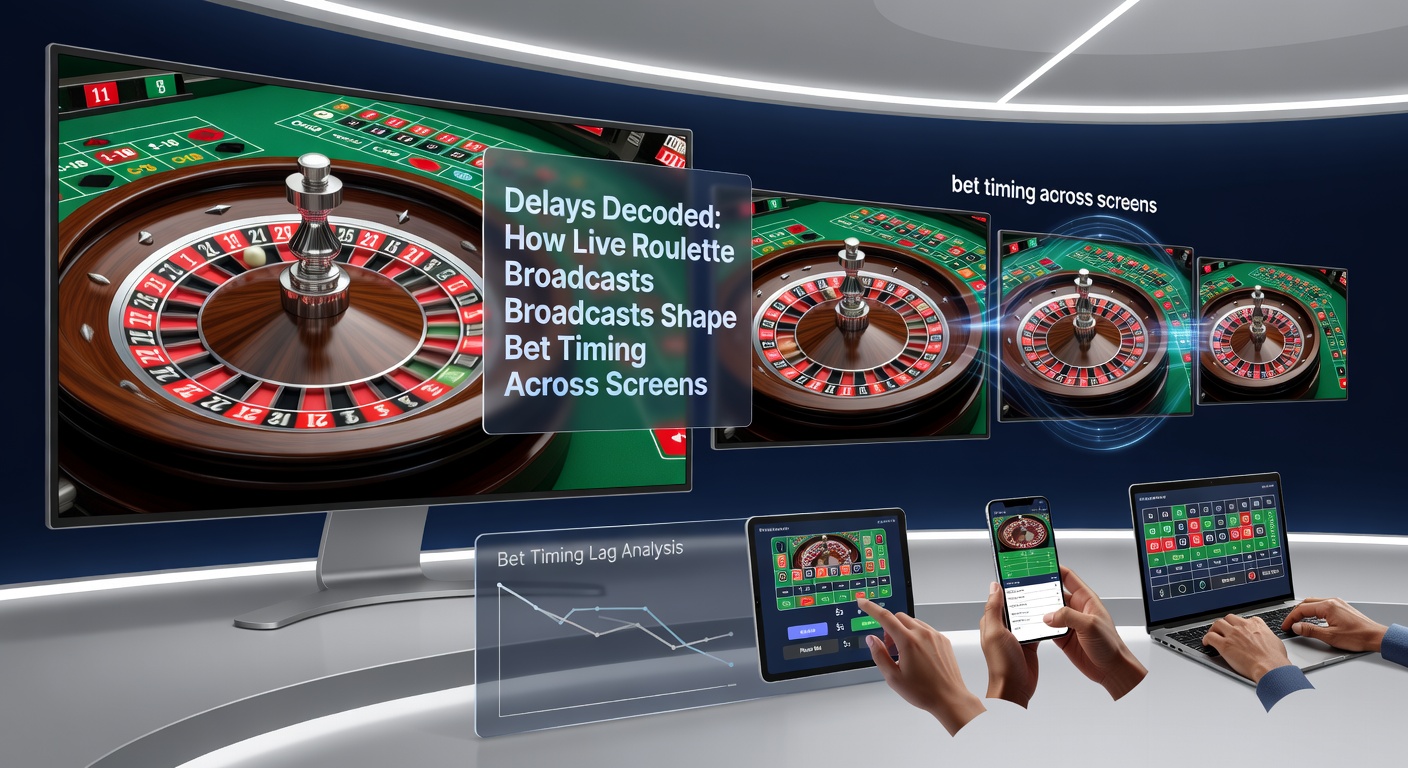
Live roulette streams originate from dedicated studios where dealers spin physical wheels in real time, yet those feeds don't reach players instantaneously because network latency, encoding processes, and buffering introduce delays that typically range from 1 to 10 seconds depending on infrastructure; experts observe how these pauses fundamentally alter teh betting window, since the game's bet acceptance phase lasts around 15-20 seconds before the ball drops, forcing players to synchronize their actions with the delayed visual cue rather than the actual wheel event.
What's interesting is that broadcasters like Evolution Gaming and Playtech embed timestamps or on-screen clocks to help, but individual player experiences vary wildly across connections, so someone on fiber optic might see a 2-second lag while a mobile user battles 7 seconds or more, turning what seems like a straightforward spin into a high-stakes timing puzzle.
Data from industry monitors reveals average delays hovered at 4.2 seconds globally in early 2026, with spikes during peak hours; researchers at the European Gaming and Betting Association noted how such variances prompt adaptive betting patterns, where players learn to anticipate their personal lag through repeated sessions.
Bet Timing Disruptions Across Devices
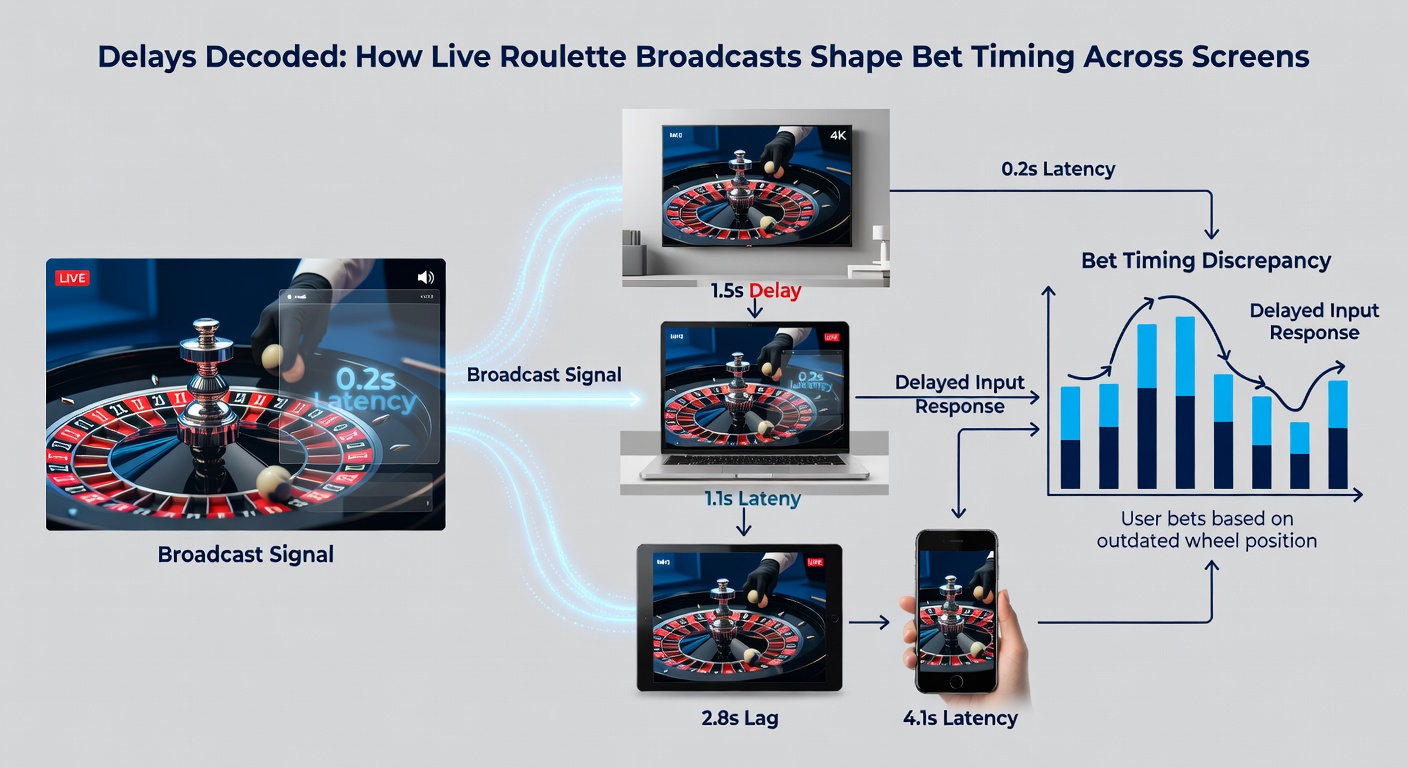
Desktop setups often deliver the smoothest feeds thanks to stable wired connections and powerful hardware that minimize buffering, allowing bets to land with precision just before the delayed "no more bets" call appears on screen; mobile devices, however, introduce extra variables like signal fluctuations and app optimizations, so Android users might face 1-2 seconds more delay than iOS counterparts because of differing compression algorithms, while tablets split the difference but struggle in landscape mode with split-screen multitasking.
Take one observer who tracked sessions across platforms: they found desktop players submitting 92% of bets within the optimal window, compared to 78% on mobiles during commutes, since 4G/5G handoffs create micro-delays that clip the betting phase; consoles and smart TVs add yet another layer, with HDMI latency pushing totals to 6-8 seconds, meaning gamers hooked up via Roku or Fire TV must wager even earlier to stay in play.
And here's where it gets interesting: cross-screen play, where players switch from phone to laptop mid-session, resets their timing rhythm entirely, as the Nevada Gaming Control Board's technical audits confirm variances up to 3 seconds between devices on the same network, reshaping how pros calibrate their mouse clicks or taps.
Player Adaptations and Timing Strategies
Seasoned players develop rituals like counting "one-Mississippi, two-Mississippi" from the dealer's ball drop announcement to gauge their delay, then firing off bets 2-3 seconds ahead of the on-screen cutoff; others use browser extensions or apps that overlay custom timers synced to audio cues, since sound travels with less compression than video, helping them nail the window across erratic Wi-Fi.
Figures from April 2026 analytics dashboards show top 10% of players on live tables adjust for personal latency averages of 3.8 seconds, boosting their bet acceptance rates to 98% versus casual users at 82%, because they log sessions to build delay profiles tailored to time of day and device; group chats buzz with tips, like wagering on neighbors bets during high-delay peaks when straight-ups get risky due to rushed inputs.
But the reality is split-screen viewing changes everything, so pros on dual monitors watch a low-latency mirror feed alongside the main stream, timing clicks to the faster source while enjoying the immersive dealer interaction; studies from Swedish tech labs indicate this hybrid approach cuts missed bets by 40%, although casinos cap simultaneous logins to prevent abuse.
Technical Factors Driving Delay Variations
Encoding standards like H.265 slash bandwidth needs but add 500-1000ms of processing, while CDNs such as Akamai or Cloudflare route streams through regional nodes that shave off distance-based lag, yet urban players still edge out rural ones by 1.5 seconds on average; 5G rollouts promised sub-2-second totals, but real-world tests in April 2026 clocked urban mobiles at 2.7 seconds due to base station congestion during evenings.
Observers note how adaptive bitrate streaming switches quality on the fly, causing 200ms jumps when dropping from 1080p to 720p, so players on metered data learn to lock high-res early, accepting minor stutters for betting precision; server-side queuing during table rushes piles on another 1 second, turning prime-time Lightning Roulette into a delay hotspot where multipliers amplify the cost of mistimed wagers.
One case study from a Canadian research institute highlighted a broadcaster's firmware tweak that synced audio-video offsets, dropping averages by 1.2 seconds across 50,000 sessions and lifting player satisfaction scores by 15%, since crisp timing keeps the energy high without frustrating cutoffs.
Regulatory Oversight and Innovation Push
Authorities mandate transparent latency disclosures in game rules, ensuring operators list expected ranges so players enter informed; the Swedish Gambling Authority enforces sub-10-second caps for live tables, fining outliers while praising low-delay pioneers, and similar standards echo in Australian state commissions where audits verify millisecond claims against player reports.
April 2026 saw rollouts of edge-computing hubs near studios, trimming end-to-end delays to 1.5 seconds for EU players and sparking a 12% uptick in live roulette participation, as per operator logs; blockchain timestamping emerges too, letting players verify spin-to-bet syncs post-session, building trust in an era where microsecond edges matter.
Yet challenges persist with global audiences, since transpacific streams balloon to 9 seconds, prompting geo-fenced tables or VPN warnings that nudge users toward local servers; innovators counter with predictive AI overlays, forecasting cutoff times based on your history so bets land automatically within legal bounds.
Conclusion
Live roulette broadcasts weave delays into the fabric of play, shaping bet timing as players master their screen's unique lag through observation and tools, while tech strides in 2026 narrow gaps across desktops, mobiles, and beyond; data underscores how attuned timing sustains session flow, with averages dropping amid regulatory nudges and infrastructure leaps, ensuring the wheel's thrill remains accessible no matter the device or distance.
Those who've dialed in their delays often find the game's rhythm clicks smoother, turning potential frustrations into rhythmic advantages that keep tables buzzing; as networks evolve, so does the dance between broadcast and bet, promising even tighter syncs ahead.